


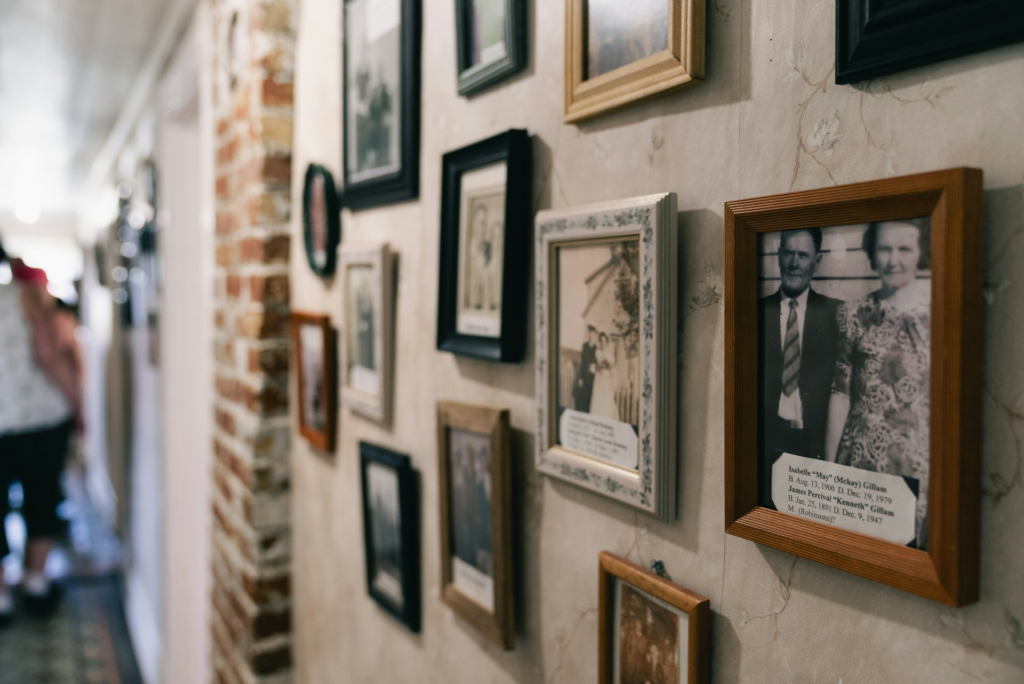
Finding a Polish ancestor’s birth record can feel like assembling a family story from scattered pieces: a remembered village name, an unfamiliar spelling on a passenger list, a faded photograph, or a family tradition passed down through generations. The search is often deeply personal, especially for descendants of emigrants whose connection with Poland was interrupted by war, changing borders, migration, or the simple passage of time. Polish records can be remarkably rich, but they also require patience because the answer may be held in a parish archive, a civil registry office, a state archive, or a digitised collection under a historical place name. A careful, methodical approach makes the process more manageable and helps prevent common mistakes that can send research in the wrong direction.
Begin with What You Already Know
Before searching Polish databases or contacting archives, gather every document and family detail available in your own country. Birth certificates, death certificates, marriage licences, obituaries, naturalisation papers, military draft cards, immigration files, cemetery records, family Bibles, and old letters may all contain clues about the ancestor’s origins.
The most useful information is usually not simply “Poland” as a country of origin. Poland has a complex historical geography, and many people who described themselves as Polish in American, Canadian, British, Australian, or Brazilian documents were born in territories that were once governed by Russia, Prussia, or Austria-Hungary. A record may therefore list Russia, Germany, Galicia, Austria, or a regional term rather than Poland.
Try to identify the exact place of birth or residence, even if it is only a parish, district, or nearby town. A village name is often the key to locating the correct record. For example, a passenger list stating that Jan Kowalski was born in “Warsaw” may refer to the city, the former Warsaw Governorate, or simply the broader region. By contrast, a note saying “Łomża, parish of Piątnica” provides a much more reliable starting point.
Create a Research Profile for Each Person
It is helpful to prepare a simple profile before beginning archival work. This keeps evidence organised and makes it easier to distinguish between people with similar names.
- Full name, including maiden name for women where known
- Alternative spellings and anglicised versions of the surname
- Estimated year of birth, allowing a range of at least three to five years
- Known parents, siblings, spouse, and children
- Religion, if known
- Immigration date and destination country
- Possible place names, even if spelling is uncertain
- Sources for each piece of information
This last point is important. Family history research can become emotionally absorbing, and it is easy to treat a plausible match as a proven fact. Keeping a note of where each detail came from allows you to revisit conclusions when new evidence appears.
Understand Poland’s Historical Borders and Administrative Changes
One of the greatest challenges in Polish genealogy is that modern Poland did not exist as an independent state between 1795 and 1918. During the partitions, Polish lands were divided among three empires: Russia, Prussia, and Austria-Hungary. Each administration kept records in different formats, languages, and systems.
As a result, an ancestor born in what is now eastern Poland might have a birth entry written in Russian Cyrillic. Someone from western Poland may appear in German-language civil registers, while a person from southern regions such as Galicia may be recorded in Latin, Polish, or German. Earlier Catholic parish records are frequently written in Latin, and Jewish records may appear in Polish, Russian, German, Hebrew, or Yiddish depending on the period and locality.
The modern location of a village does not always indicate where its historical records are stored. Borders shifted repeatedly during the nineteenth and twentieth centuries. Some places that were once part of Poland are now in Lithuania, Belarus, Ukraine, or western Russia. Conversely, locations now within Poland may have belonged to Prussia or Austria when your ancestor was born.
For this reason, identify both the current location and the historical jurisdiction. Online maps, historical gazetteers, and parish directories can help establish whether a village belonged to a particular county, diocese, or civil registration district at the relevant time.
Know Where Polish Birth Records May Be Held
Polish birth records are generally preserved in several types of institutions. The correct repository depends on the person’s religion, place of birth, and the year of the event.
Civil Registry Offices
Polish civil registration offices, known as Urząd Stanu Cywilnego or USC, hold relatively recent vital records. Access rules are governed by privacy legislation, so direct descendants may need to demonstrate their relationship to the person named in the record. In many cases, a birth record remains in the civil registry for 100 years before it is transferred to a state archive.
If you are requesting a record from a USC, prepare documentation that supports your legal interest or direct-line relationship. Requirements may vary, and official copies can involve administrative fees. It is wise to contact the office in advance and ask about the preferred language, acceptable identification, payment methods, and whether an apostille or certified copy is needed for legal purposes.
State Archives
Older civil registers are commonly transferred to state archives. The Polish State Archives system has digitised many collections, although coverage varies considerably by region and period. Some indexes and scans are available online, while other materials can only be viewed in person or requested through an archive.
When contacting an archive, provide concise and specific information: the full name, estimated birth year, locality, religion, and names of parents if known. Broad requests such as “Please find all records for my family” are difficult for archivists to fulfil. A focused inquiry is more likely to receive a useful response and may also reduce research fees.
Parish and Diocesan Archives
For many families, especially before widespread civil registration, the parish was the central record-keeping institution. Roman Catholic, Greek Catholic, Orthodox, Lutheran, and other religious communities maintained baptismal registers that often include a child’s birth date, baptism date, parents’ names, residence, and names of godparents.
Godparents can be especially valuable genealogical clues. They were often relatives, neighbours, or close family friends. If a baptism record names a godparent with the same surname as the child’s mother, it may point to a maternal sibling or another branch of the family.
Parish records may remain in an active parish, a diocesan archive, a state archive, or a digitised genealogy collection. Some priests and parish administrators are able to assist, but they may have limited time and no obligation to conduct extensive research. Courteous, brief communication is essential.
Search by Place, Not Only by Surname
Common surnames can make Polish research difficult. Names such as Kowalski, Nowak, Wiśniewski, Wójcik, and Zieliński occur in many unrelated families across the country. Even less common surnames may appear in several villages. A surname match alone is rarely sufficient evidence.
Instead, build your search around a combination of details:
- Exact or probable village, town, or parish
- Approximate year of birth
- Parents’ names
- Religious denomination
- Occupation or social status, where recorded
- Names of siblings and witnesses
For instance, if you are looking for a woman known in the United States as “Maryanna Wysocki,” her original record may list her as Marianna, Marya, Marianna Wysocka, or even a Latin form such as Mariana. Polish surnames also change according to gender: a man might be recorded as Wysocki and a woman as Wysocka. These grammatical forms should be considered when searching indexes and manuscript registers.
Prepare for Language and Handwriting Challenges
Polish birth records may be straightforward printed forms or dense handwritten entries in an unfamiliar script. Records from the Russian partition can be particularly challenging because they may use nineteenth-century Cyrillic handwriting. German records may use old Gothic scripts, and Latin entries often rely on abbreviations and formulaic phrases.
You do not need to become fluent in every historical language to begin. Learn the recurring terms for birth, baptism, parents, legitimate child, house number, occupation, and witnesses. In most birth records, the structure is repetitive, making it easier to identify essential facts once you understand the layout.
If a document is difficult to interpret, consider obtaining a transcription rather than relying solely on automated translation. A single letter in a village name or surname can alter the result of a search. This is also a point at which Polish ancestry search services can be useful for researchers who have identified a likely locality but need support with archival conventions, historical place names, or older handwritten records.
Five to Europe is one example of a resource that may help descendants approach Polish family research with a clearer understanding of local records and administrative structures. Even when outside assistance is used, retain copies of original documents, translations, correspondence, and source citations. These materials form the evidence behind your family narrative.
Consider Legal, Financial, and Practical Questions
Not every genealogical request has the same purpose. Some people are researching family identity, while others need official documents for citizenship, inheritance matters, property claims, or legal applications. The type of copy required may differ significantly.
A genealogical scan is not always a legally valid certificate. If you need a document for citizenship by descent or another formal procedure, confirm the requirements before ordering records. You may need a certified copy, a full extract rather than an abbreviated one, a sworn translation, or an apostille. Requirements can vary according to the receiving authority and the country in which the document will be used.
Financial planning is also sensible. Archive searches, certified copies, translators, notarial services, courier delivery, and professional research may involve costs. Set a realistic budget and prioritise the records most likely to establish the next generation in your family line. Ordering every available record immediately can be expensive and may create more material than you can properly evaluate.
Organisational discipline saves time and money. Keep a research log containing:
- The repository or website searched
- The exact collection, volume, and years examined
- Search terms and spelling variants used
- Records found and records not found
- Fees paid and requests submitted
- Questions that remain unresolved
Approach Sensitive Discoveries with Care
Birth records can reveal more than dates and names. They may disclose a previously unknown father, a child born before a marriage, an adoption, a change of religion, or a family residence connected to difficult historical events. In Polish history, records may also intersect with displacement, forced migration, wartime loss, persecution, and changing identities.
Such discoveries can have an emotional and, occasionally, health-related dimension. A documented family line may help explain inherited medical patterns, but genealogical evidence should never be treated as a medical diagnosis. If a record suggests a hereditary condition or recurring cause of death, it can be a reason to discuss family history with a qualified healthcare professional, not a substitute for clinical advice.
When sharing discoveries with relatives, allow room for different reactions. One family member may find a new record deeply meaningful, while another may feel unsettled by information that challenges long-held beliefs. Present documents carefully, distinguish evidence from interpretation, and avoid making definitive claims where the proof remains incomplete.
Use Negative Results Constructively
Not finding a birth record does not necessarily mean that the record was destroyed or that the family story is incorrect. The person may have been registered in a neighbouring parish, recorded under a spelling variation, born in a settlement associated with a larger administrative town, or listed with a different given name. In some cases, the family may have moved shortly before or after the birth.
Expand the search gradually. Check nearby parishes, examine siblings’ records, look for the parents’ marriage entry, and trace the family through death records, household lists, land records, or military documents. A marriage record may provide the birthplace of a person whose birth record remains elusive. Likewise, the birth record of a younger sibling may identify the family’s precise residence.
Patience is one of the most valuable skills in genealogy. A dead end often becomes productive later when a new archive collection is digitised, a relative shares an overlooked document, or a different spelling leads to the correct locality.
Build a Record-Based Family Story
Tracking down an ancestor’s Polish birth record is rarely a single search. It is a process of comparing evidence, understanding local history, and respecting the limits of incomplete documentation. The strongest conclusions come from several records that support one another: a baptism entry, a marriage certificate, an immigration document, and perhaps a sibling’s record or a grave inscription.
Begin with the details closest to home, focus on identifying the exact locality, and remain alert to historical borders, language differences, and name variations. Keep your research organised, verify each connection, and treat sensitive discoveries with care. A Polish birth record may be only one document, but it can open the way to a fuller understanding of the people, places, and circumstances that shaped your family’s journey.