






Table of Contents
- Enhanced Lighting Systems
- Advanced Audio Alerts
- Vehicle-to-Vehicle Communication
- Emergency Vehicle Preemption Systems
- Driver Notification Technologies
- Integration of Automatic Emergency Braking
- Final Thoughts
Emergency vehicles have always played a pivotal role in safeguarding the public and ensuring rapid response in times of crisis. Today, these lifesaving vehicles are equipped with the latest safety and efficiency innovations, improving outcomes for both first responders and the communities they serve. These advancements are making emergency operations safer and more effective, as seen with solutions from TCS Upfitting that integrate cutting-edge safety features into modern fleets.
Technology now enables emergency vehicles to operate with enhanced reliability, increased visibility, and improved communication systems. These changes not only protect police officers, firefighters, and medical personnel but also significantly enhance public road safety. As agencies strive to keep up with advancing standards, both government regulations and private-sector partnerships are accelerating the rapid evolution of emergency vehicle technologies.
As traditional vehicles become quieter and roadways become busier, the demand for innovative alert and response systems in emergency vehicles has never been higher. From synchronized lighting and advanced sirens to intelligent communication networks, today’s advancements are designed to ensure swift access to emergencies while minimizing collision risks and confusion at busy intersections.
Enhanced Lighting Systems
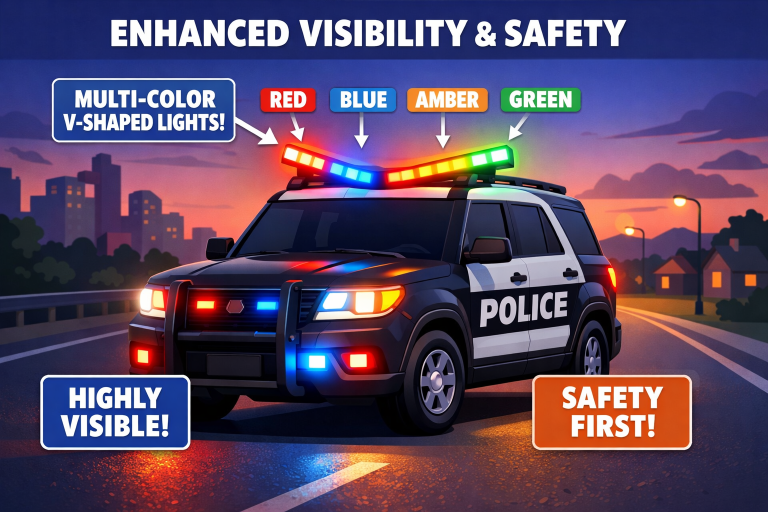
Modern emergency vehicles benefit from revolutionary lighting solutions designed to optimize visibility in every environment. For example, the Pennsylvania State Police have installed V-shaped light bars that provide 360-degree illumination, vastly improving motorists’ and pedestrians’ ability to see and respond to emergency vehicles, whether stopped or moving, at any time of day. These multifunctional lights serve several purposes, not only alerting traffic, but also transforming into digital arrow boards that help direct vehicles around incidents, reducing bottlenecks and collision risks.
Advanced Audio Alerts
Audio alert systems are evolving beyond the traditional siren. With vehicles better insulated against noise, it is increasingly difficult for drivers to detect approaching emergency vehicles. Solutions like low-frequency rumbler devices generate deep vibration signals alongside conventional sirens, boosting sound pressure levels by up to 10 decibels inside nearby cars. This technology enables even the most soundproof vehicles to detect an emergency sooner, greatly improving response times and driver compliance. Emerging research from the Pennsylvania State Police demonstrates that such audio innovations are crucial for overcoming new challenges posed by modern vehicle acoustics.
Vehicle-to-Vehicle Communication
Emergency services are increasingly relying on synchronized vehicle-to-vehicle (V2V) communication systems, which improve coordination on the scene and make it more precise and efficient. Using GPS technology, these systems enable emergency vehicles to automatically match their lights and sirens with nearby units, creating a cohesive alert presence. This coordinated effort helps reduce confusion during crowded or chaotic emergencies. Enhanced V2V communications are also vital for sharing critical real-time data, improving scene management, and keeping first responders safer during coordinated responses. The implementation of V2V tech is a major step forward in the broader adoption of ‘smart’ emergency fleets nationwide.
Emergency Vehicle Preemption Systems
Emergency Vehicle Preemption (EVP) systems allow emergency vehicles to change traffic signals in their favor, rapidly and safely clearing a path through congested intersections. Manatee County, Florida, has been at the forefront of this advance, expanding EVP coverage to more than one hundred intersections. The impact is significant, as responders can save valuable minutes on their routes and reduce the crash risks associated with red-light running. Similar programs are being adopted in cities nationwide, with positive effects on response times and overall traffic safety. These developments are recognized as one of the most effective investments in community emergency preparedness and public safety.
Driver Notification Technologies
With driver distraction on the rise, innovative solutions now deliver real-time alerts directly to motorists’ dashboards and navigation apps. Systems like Safety Cloud use connected vehicle technology to notify drivers when emergency vehicles are nearby or stopped at the roadside. This proactive alert gives drivers time to slow down and move over, helping prevent collisions with first responders. Massachusetts State Police, among others, have implemented this next-generation notification technology, demonstrating clear reductions in road accidents involving emergency vehicles after deployment.
Integration of Automatic Emergency Braking
Automatic Emergency Braking (AEB) is becoming a required feature in new emergency vehicles, reflecting broader automotive safety trends. These automated systems scan for imminent collisions and apply brakes without driver input, protecting both first responders and civilians in dangerous situations. Enforcement of AEB requirements by the National Highway Traffic Safety Administration ensures that all new emergency fleet vehicles will be equipped with this technology by 2029. Both research and case studies underscore the life-saving potential of AEB, providing another critical layer of defense for busy urban and rural road networks.
Final Thoughts
The rapid integration of advanced technologies into emergency vehicles marks a turning point in public safety and emergency response. Enhanced lighting, modern audio systems, synchronized vehicle communication, traffic signal control, driver notification tools, and automatic collision prevention features together create a safer environment for everyone. As technology continues to advance, communities can expect reduced emergency response times, fewer roadway collisions, and improved outcomes for those requiring urgent help. Investments made today in emergency vehicle safety will continue to yield benefits for years to come.