Wood was the default backyard fence material for decades, and for most of that time, homeowners just accepted what came with it: annual staining, rotting boards, termite damage, and the inevitable replacement project every ten to fifteen years.
Vinyl improved on some of those problems but introduced others. It fades, cracks in hard freezes, and looks noticeably plastic up close. Corrugated metal entered the backyard fencing conversation as a genuine alternative, and it has earned its place there.
Steel is one of the most durable and widely recycled construction materials on the planet, with a lifespan in outdoor applications that consistently outpaces wood and vinyl under comparable conditions. The case for corrugated metal panels is not complicated — it comes down to durability, maintenance, and long-term value.
Here is a closer look at why corrugated metal fence panels hold up so well and why more homeowners are choosing them over traditional materials.
1. Built for Strength, Not Just Style
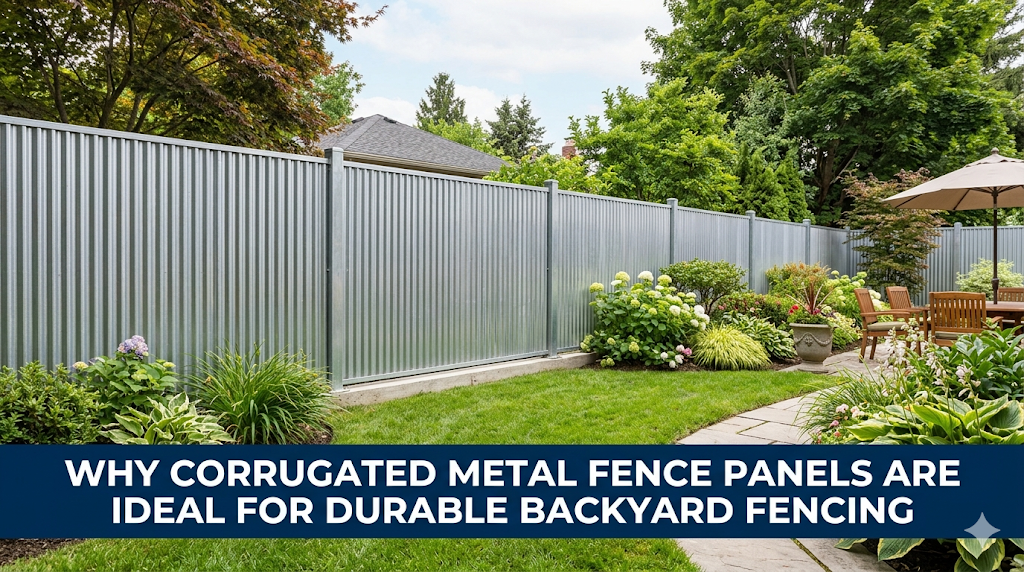
The ridged appearance of corrugated metal fence panels is not just aesthetics; it is engineering. These ridges and valleys of the corrugated pattern provide an even distribution of weight on the face of the fence panel.
Consequently, a corrugated sheet of metal can withstand much more impact force than a flat sheet of the same gauge. It is for this reason that corrugated steel has been the material of choice for roofing and industrial construction for over a century, until someone finally thought to use it on a fence.
That structural advantage carries directly into fence performance. Corrugated panels resist denting from wind-driven debris, hold their shape under sustained pressure, and do not flex the way thin flat panels do at standard fence heights. The ridged profile adds rigidity without requiring thicker gauge steel, which keeps material costs manageable while maintaining real structural performance.
The base material in most quality panels is galvanized steel, coated with zinc to block rust even when the surface takes minor scratches. Better-quality corrugated metal fence panels may also have a polyester powder coat applied over the galvanization to protect the material from the harsh elements, giving homeowners options beyond the metal’s appearance.
2. Less Maintenance Than Any Other Fence Material
The maintenance gap between corrugated metal and traditional fence materials is substantial, especially over a long period of time. For example, a wood privacy fence typically requires staining or sealing every two to three years.
If you forget to do it one cycle, the boards begin to dry out, crack along the grain, and eventually cup or rot from the inside out. Ten years into a fence’s life, it’s likely that you’ll need to start replacing boards. Fifteen to twenty years into a fence’s life, it’s likely you’ll need to remove the fence entirely.
Corrugated metal needs none of that. The USDA Forest Products Laboratory notes that wood fences in high-decay-hazard regions require regular treatment with water-repellent preservatives to resist rot — and even then, the underlying wood remains vulnerable to moisture, insects, and UV degradation in ways that metal is simply not.
Metal does not crack, warp, absorb water, or attract termites. Occasional cleaning and a seasonal check on fasteners are genuinely all a corrugated steel fence requires to maintain its performance year after year.
3. Full Privacy and Reliable Containment
A backyard fence serves a dual purpose: to enclose your space and to define the boundaries. Corrugated metal panels do just that without compromising either purpose. They provide full obstruction of sightlines, unlike wooden slat designs that only obscure views partially.
The material is also less vulnerable to tampering than wood, which is important when there are pets to consider. Another advantage of corrugated metal panels is their adaptability to varying heights. They can be installed as a standard 6-foot fence for privacy or as an 8-foot fence when the yard is situated near elevated buildings or elevated terrain.
Panels can be mounted vertically for a sleek look or horizontally for a more contemporary appearance that has been incorporated into urban residential architecture in the last few years. Using a combination of metal and wood posts made from cedar and pressure-treated wood gives a fence a mixed-media appearance that tones down the industrial look if preferred.
4. Better Value Over the Life of the Fence
Corrugated metal fence panels typically cost between $15 and $35 per linear foot installed, depending on panel gauge, finish, and labor in your area. That is competitive with mid-range wood privacy fencing and cheaper than high-quality cedar at current lumber prices, which have remained elevated since the supply chain volatility of 2021.
The real cost advantage appears over the life of the fence. Wood fencing at $15 to $25 per linear foot requires staining every few years, periodic board replacement, and eventual full replacement within 20 years.
Corrugated metal at a similar install price runs 40 to 60 years with minimal intervention. When you factor out the maintenance labor, material costs for upkeep, and the replacement timeline, metal comes out well ahead on total cost of ownership for most residential applications.
Conclusion
Corrugated metal fence panels earn their growing popularity in residential backyards the straightforward way: they outlast the alternatives, require less maintenance than any of them, and look better doing it than they used to.
The material is not without tradeoffs. It carries more industrial weight aesthetically than wood, and the initial installation takes more care than slapping up fence boards.
But for homeowners who want a fence that is genuinely finished once it is built, that performs through every climate without a maintenance calendar, and that still looks sharp at year twenty, corrugated metal is the most honest answer the fencing market offers right now.